
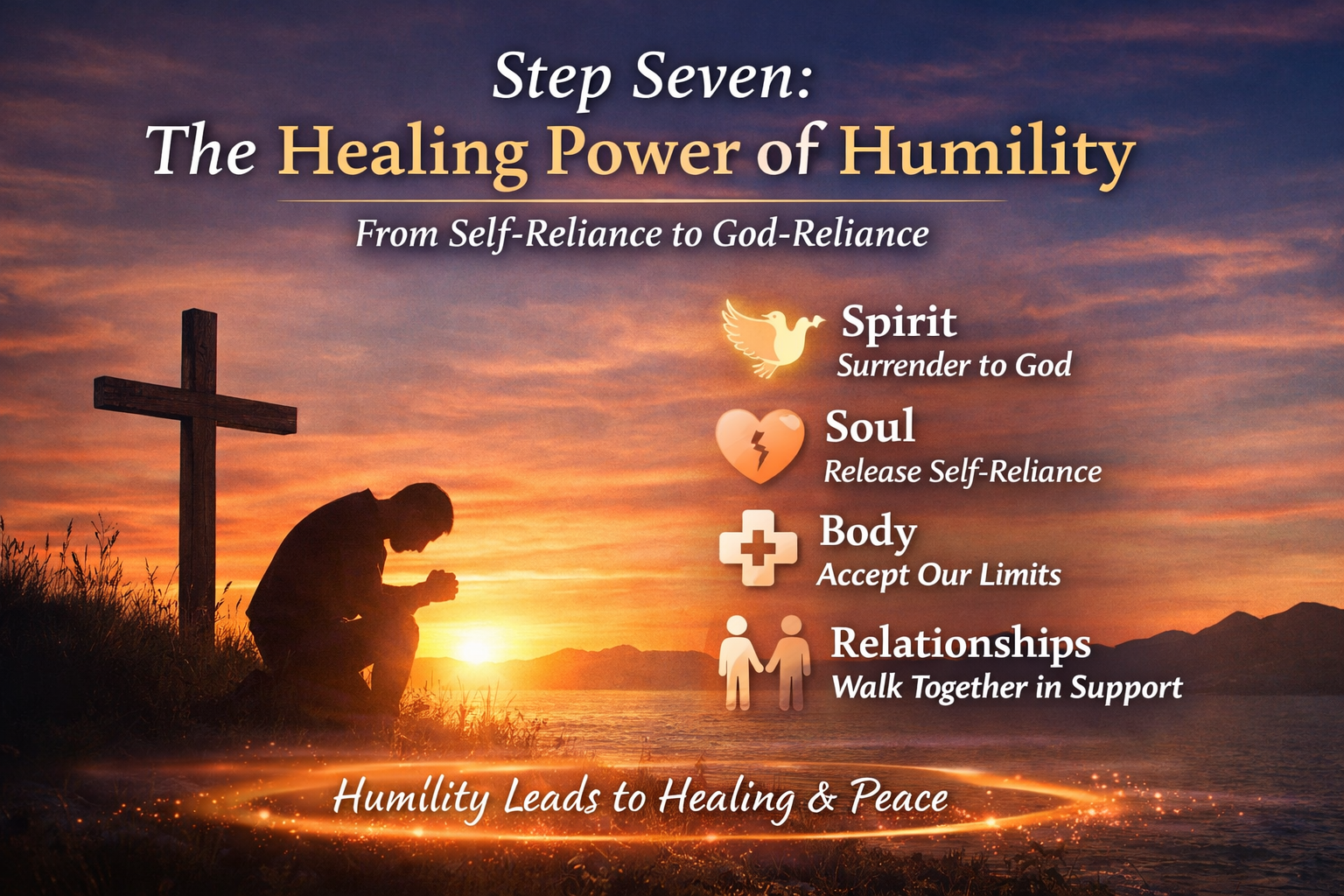
Step Seven: The Healing Power of Humility
From Self-Reliance to God-Reliance
Humility is often misunderstood.
Many people hear the word and think of weakness, shame, or humiliation. But in the journey of mental and spiritual healing, humility is not about thinking less of yourself—it’s about recognizing you don’t have to carry everything alone.
Step Seven in the No Shame Ministries recovery and mental wellness journey marks a powerful shift:
From willingness… to surrender.
From self-reliance… to God-reliance.
As our Step Seven statement says:
“We humbly asked God to strengthen us, relieve us of destructive thoughts, and fill us with His peace.”
Step 7_Humility_Group_Lesson
Humility Is the Gateway to Healing
Step Six prepared our hearts by making us willing to change. Step Seven invites us to take the next step—admitting that transformation requires help beyond ourselves.
Humility opens the door for God to do what we cannot:
-
Strengthen us where we feel weak
-
Quiet destructive thoughts
-
Replace anxiety with peace
-
Heal patterns we’ve been unable to break alone
Scripture reminds us:
“Humble yourselves before the Lord, and he will lift you up.” — James 4:10
Step 7_Humility_Group_Lesson
Humility doesn’t push us down—it positions us to be lifted.
The Four Dimensions of Healing in Humility
Healing touches every part of our lives. Step Seven invites humility into four key dimensions:
1. Spirit — Surrendering to God’s Presence
Humility begins spiritually when we invite the Holy Spirit to dwell fully within us. It is the recognition that lasting peace flows from God’s presence, not our performance.
2. Soul — Releasing Self-Reliance
Many struggle with perfectionism, control, and the pressure to “fix themselves.” Humility frees us to admit we cannot heal alone—and that’s not failure, it’s honesty.
3. Body — Accepting Our Limits
Humility shows up in how we care for our physical health:
-
Asking for rest
-
Seeking medical or professional support
-
Honoring our body’s needs without shame
4. Relationships — Letting Others Walk Beside Us
Healing was never meant to happen in isolation. Humility allows trusted people—friends, mentors, clinicians, support groups—to walk with us.
We move from “I’ve got this” to “We can do this together.”
Humility and Mental Wellness
Humility plays a critical role in emotional and mental health healing.
It helps us:
-
Move away from shame and into acceptance
-
Acknowledge destructive thought patterns
-
Receive professional help without stigma
-
Embrace community support
-
Practice vulnerability in safe spaces
Admitting our limits doesn’t weaken us—it positions us for deeper strength and sustainable healing.
Step 7_Humility_Group_Lesson
Replacing Destructive Thoughts with Peace
One of the most powerful aspects of Step Seven is the invitation to release destructive thinking.
Through humility we can pray:
-
“God, strengthen me where I feel fragile.”
-
“Relieve me of thoughts that harm my well-being.”
-
“Fill me with Your peace.”
This is not passive spirituality—it’s active surrender paired with intentional mental-wellness practices such as:
-
Prayer and Scripture meditation
-
Counseling or coaching
-
Cognitive reframing
-
Support groups
-
Journaling and reflection
Faith and professional care work together—not in opposition, but in partnership.
Strength in Surrender
As we close Step Seven, we’re reminded of this truth:
Humility is not weakness—it is the strength of surrender.
Step 7_Humility_Group_Lesson
When we ask God for help and allow others to support us:
-
Destructive thoughts lose power
-
Peace begins to grow
-
Shame begins to loosen its grip
-
Healing accelerates
Humility makes room for grace.
Closing Encouragement
You were never meant to heal alone.
Humility is not about lowering your worth—it’s about opening your life to God’s strength, supportive community, and holistic care.
And in that surrender… peace begins.